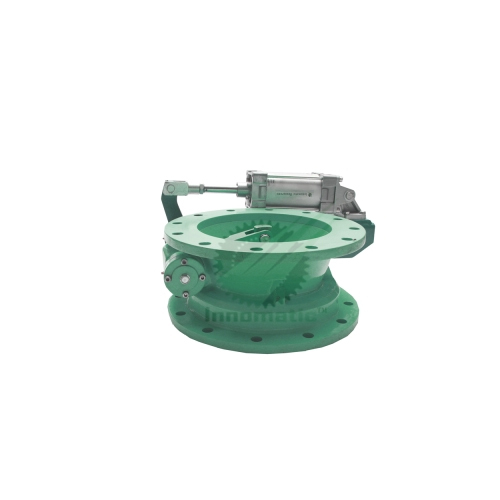
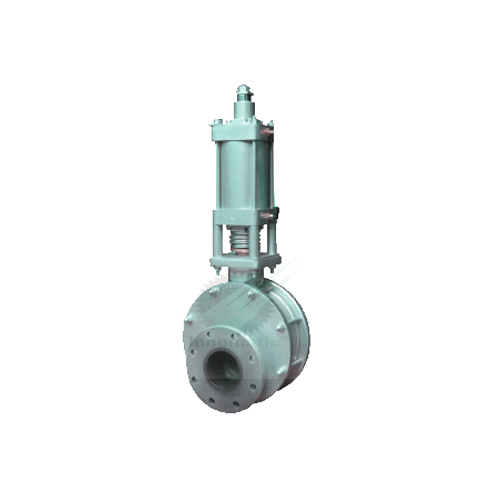
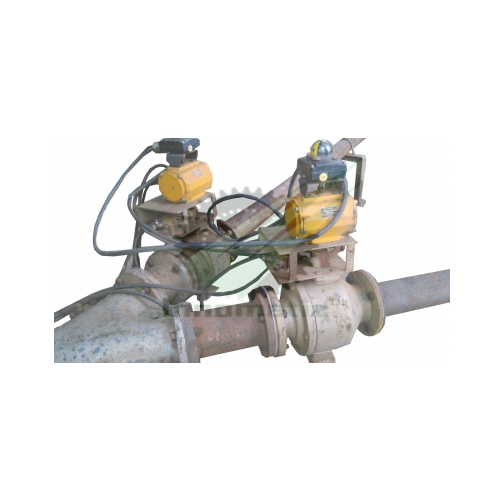
Bell Cup Valve About
- Sizes specification: 100 NB up to 600 NB (6'' up to 16'') , DN 100 up to DN600, higher on request
- End connection: Flange type
- Operations: Pneumatic cylinder standard, other on request.
Applications
Cone Valves, bell cup valve are suitable for, ash handling system, coal fired power plant, steel plant, pneumatic convoying system, cement transport systems. Any dust, powder, and granular products in coal-fired power plants , smelters , iron and steel plants , pharmaceutical and chemical industries.
Benefits
- Low moving parts.
- Simple in construction.
- Easy installation
- Easy for Maintenance
- Easy Replacement of the bell cup ,cone and seat
Features
- Full Bore Material Flow
- Fast Closing & Opening
- Low Maintenance
- Long Operating Life Capable of handling fine
- Grain materials and head abrasive products
Versatile Flow Control for Multiple IndustriesThe Bell Cup Valve is engineered to manage the flow of water, oil, gas, and a variety of chemical fluids, supporting power stations, chemical plants, and general industrial settings. Its diverse material options and customizable finishes allow tailored integration into new or existing systems, ensuring efficiency and consistent performance even in harsh or corrosive environments across India and beyond.
User-Friendly Design with Reliable OperationDesigned for simplicity, the manual, quarter-turn mechanism of the Bell Cup Valve allows effortless operation and straightforward flow regulation. The insulated steel handle enhances safe handling, while a leak-proof, compact form factor makes installation easy. The full bore and minimal pressure drop ensure optimal flow rates, making maintenance infrequent and servicing simple when needed.
FAQ's of Bell Cup Valve:
Q: How do I choose the right Bell Cup Valve size for my application?
A: Select the Bell Cup Valve size based on your system's port dimensions and flow requirements, available from 1/2 inch to 2 inches (DN15-DN50). If unsure, consult your system's specifications or contact the manufacturer or supplier for guidance.
Q: What are the benefits of the valve's full bore and minimal pressure drop design?
A: The full bore structure allows the fluid to pass through with minimal obstruction, maintaining high flow rates and reducing energy loss from pressure drops, making the valve ideal for efficient industrial operations.
Q: When should I opt for threaded versus flanged end connections?
A: Threaded (screwed) connections are suitable for smaller pipes and systems requiring easier installation and removal, while flanged end connections are better for larger pipelines or when secure, leak-proof joints are critical.
Q: Where can the Bell Cup Valve be used?
A: This valve is suitable for water treatment, chemical processing, oil, gas supply, and general-purpose flow control in a wide range of industrial, commercial, and utility settings, both in India and for export markets.
Q: What maintenance is required for the Bell Cup Valve?
A: The valve is designed to be low-maintenance and easy to service. Periodic checks for seal integrity and cleaning are generally sufficient for lasting performance, even when used with corrosive or demanding media.
Q: How does the valve handle different fluids and temperatures?
A: Featuring Nitrile rubber gaskets for effective sealing and a choice of corrosion-resistant materials, the Bell Cup Valve efficiently manages clean water, oils, gases, and chemical fluids at temperatures from -10C to 85C.
Q: What are the advantages of the powder coated, painted, or polished finishes?
A: These surface finishes not only improve the valve's appearance but also enhance corrosion resistance and durability, making them suitable for exposure to harsh industrial environments.




 Send Inquiry


 Send Inquiry


